Nutrition planning for dietitians
From nutrient goals
to daily servings.
Explore how a dietitian could turn a daily energy target into food exchanges for weight management or competitive sport.
Nutrition planning for dietitians
Explore how a dietitian could turn a daily energy target into food exchanges for weight management or competitive sport.
Explore the concept
Keep fruit at two servings or exclude a category. Compare the example plan with its calorie and macronutrient targets.
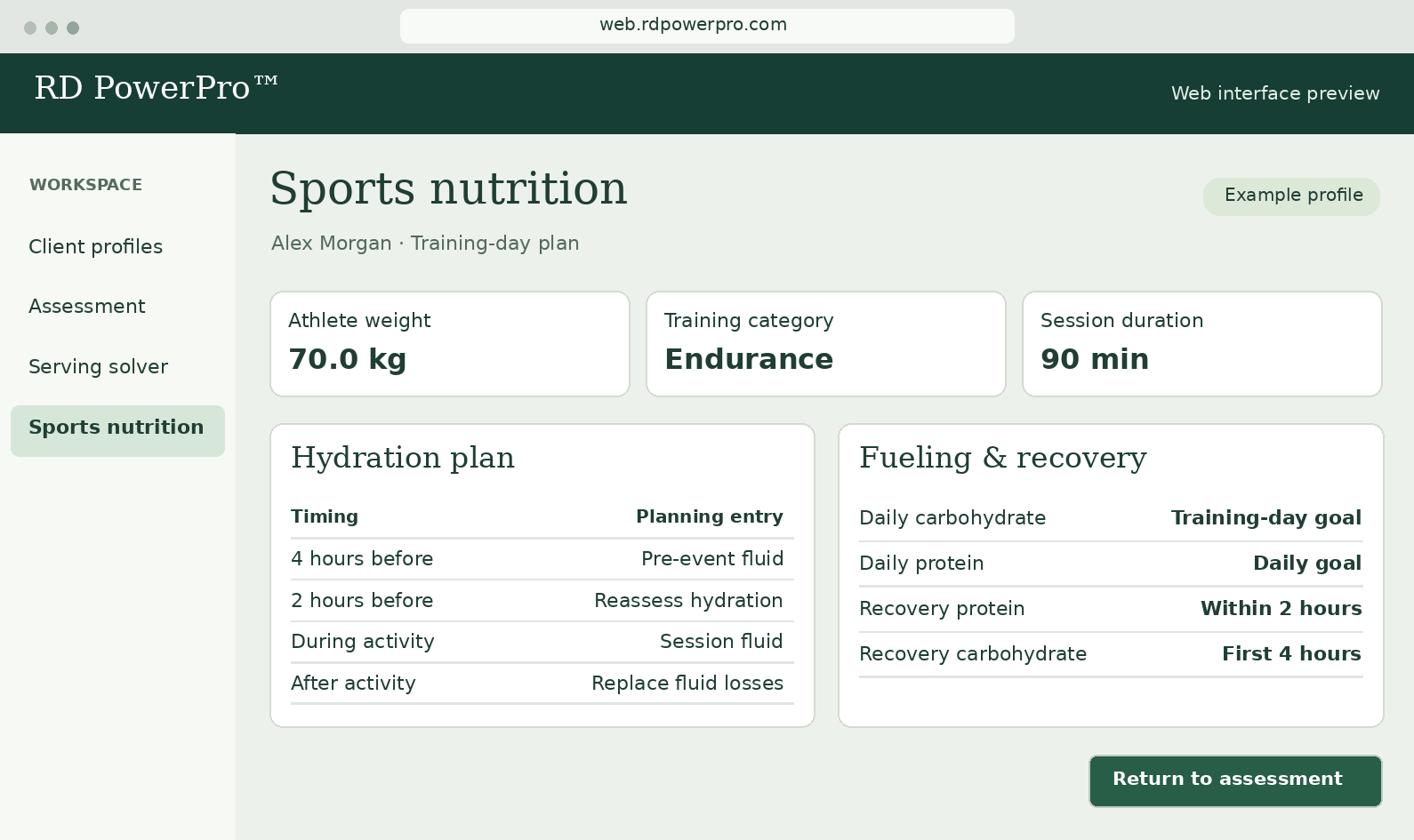
Review an athlete example with daily fueling goals and hydration checkpoints before, during, and after training.
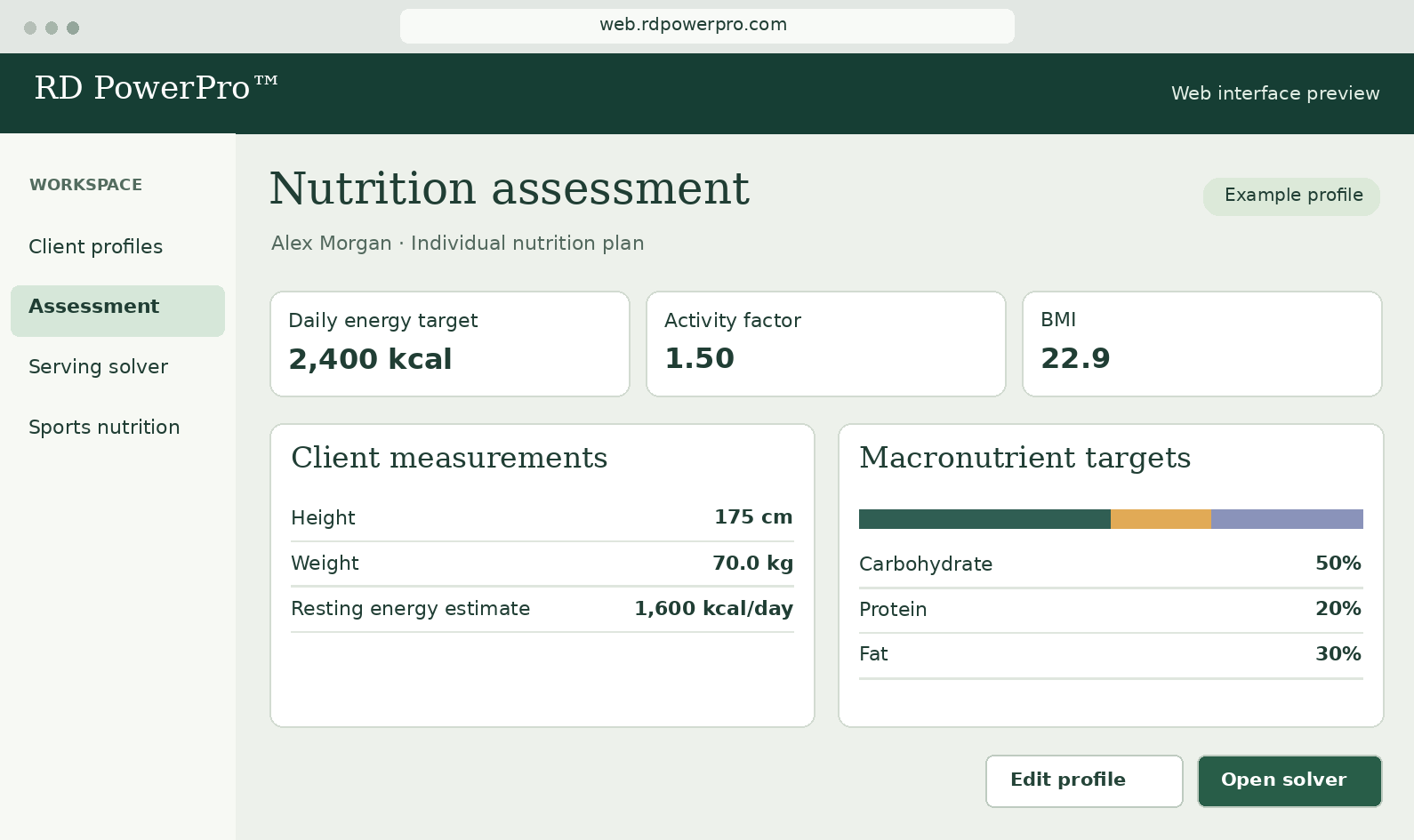
Move from a fictional client record to its assessment. The walkthrough shows how measurements and a plan fit together.
Assessment design
The design begins with age, height, weight, and activity level. Energy-estimation methods in the reference design include Harris–Benedict and Mifflin–St Jeor. The fat-free-mass option uses measured or estimated lean mass. In the illustrated assessment, 1,600 kcal of resting energy multiplied by an activity factor of 1.50 gives a daily estimate of 2,400 kcal.
Sports nutrition
The athlete view groups pre-event hydration, fluid during exercise, and post-event replacement. Recovery planning separates protein within the first two hours from carbohydrate intake over the first four. These are example planning fields for dietitians to review.